The Life of St Winefride
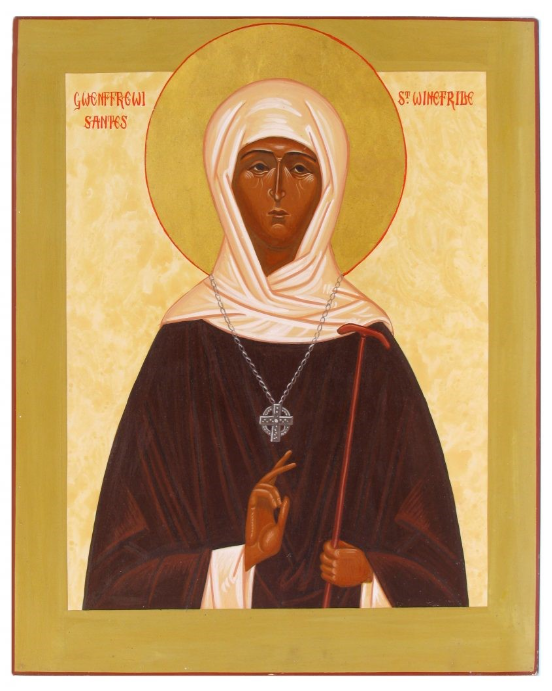
St Winefride was a 7th-century Welsh saint who dedicated herself to God from a young age. According to her Life, she was the daughter of a noble Christian family and desired to devote herself to a life of prayer and virginity. A prince named Caradog, having encountered Winefride, pursued her and sought to take her for himself. When Winefride refused his advances and fled to seek refuge, Caradog pursued her in anger and struck off her head. Where her head fell to the ground, a spring miraculously appeared, which became the Holy Well at what is now Holywell.
St Beuno, Winefride’s uncle and spiritual father, came upon her and, through prayer, restored her to life, leaving only a slender white scar around her neck as a lasting reminder of her martyrdom. Winefride subsequently continued her life of devotion to God, eventually becoming a nun and abbess at Gwytherin. The Holy Well has remained a place of pilgrimage ever since, drawing Christians to honour the memory of St Winefride and seek the prayers of this holy martyr.
The Pilgrimage
On Saturday, 3rd October, a few members from our parish gathered at St Barbara’s Church in Chester, accompanied by many other Orthodox Christians, to begin the pilgrimage to St Winefride’s Well in Holywell. The group set out at 2:30am for the 18-mile walk, which took approximately six hours. As the hours passed, the darkness gradually gave way to the morning light, and the walk continued towards Holywell. Although the distance was demanding, walking together gave the pilgrimage a sense of fellowship and purpose. The journey itself became an opportunity to pray, talk, and reflect as we made our way towards the holy well.
Having completed the walk, we arrived at Holywell in time for Matins at 10am. This was followed at 11am by a Hierarchical Divine Liturgy, with the bishop in attendance. After having spent the early hours of the morning walking towards the shrine, it was a fitting culmination of the pilgrimage to come together for the Divine Liturgy and give thanks to God in prayer and worship.
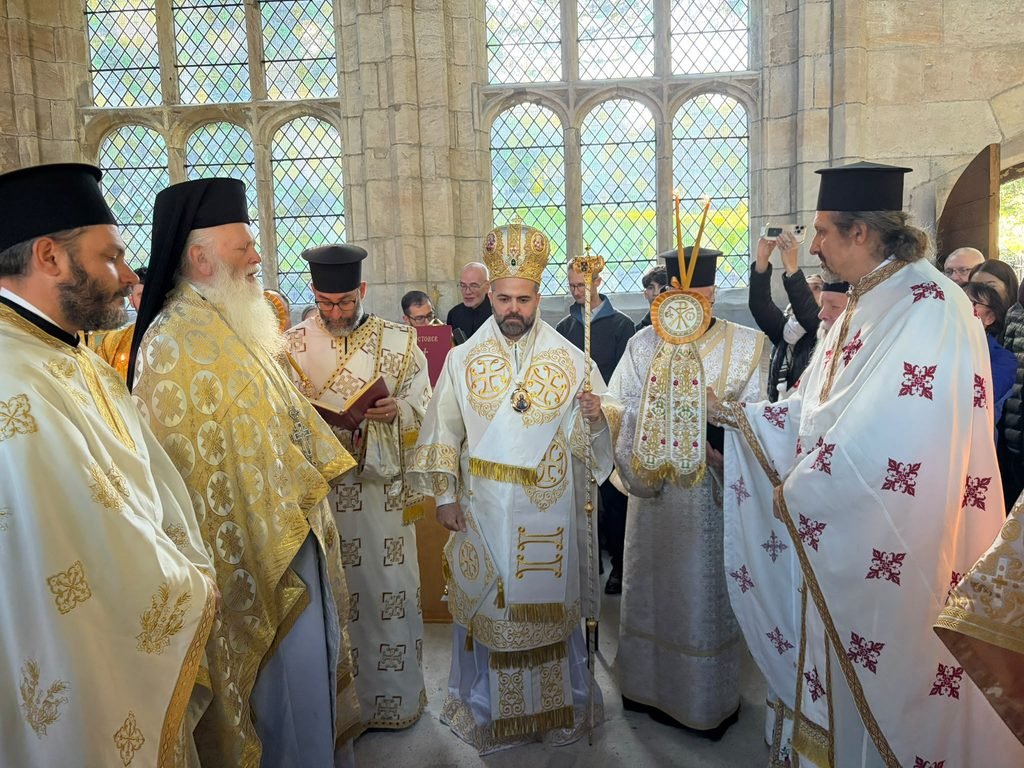
Following the Liturgy, we visited St Winefride’s Well itself before Vespers, where the waters were blessed and the faithful were sprinkled with holy water. We were able to venerate the relics of St Winefride and spend some time at the Holy Well, which has been a place of pilgrimage for centuries. Some of the pilgrims even entered the well itself, while others drank from the water or collected some to take home.
It was particularly meaningful to visit the well after hearing the story of St Winefride and to see the place where, according to her Life, the spring first appeared following her martyrdom. We then gathered for Vespers at 2:30pm, bringing the day of prayer and pilgrimage towards its conclusion.
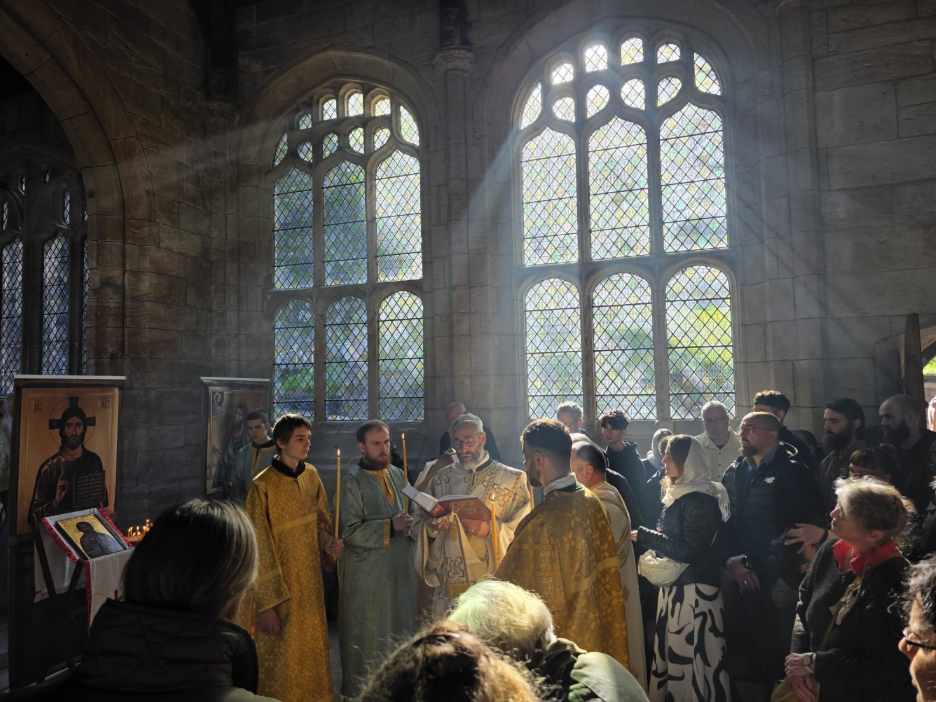
The pilgrimage brought together Orthodox Christians in prayer and fellowship as we travelled to one of the most ancient Christian holy sites in Wales. Through the long walk, the Divine Liturgy, the veneration of St Winefride’s relics and the services at the shrine, the day provided an opportunity to honour the memory of this holy martyr and to pray at the place associated with her life and witness. Holy Martyr Winefride, pray for us.